The pursuit of health equity in Africa necessitates a relentless focus on those most systematically left behind. Yet, some populations remain profoundly marginalized that they are invisible to the very systems designed to promote inclusion. Among them are individuals with deafblindness, a distinct dual sensory impairment whose profound exclusion represents a critical failure of current disability frameworks. A growing body of evidence presents a compelling case that formal recognition of persons with disabilities, including deafblindness, is not merely a bureaucratic footnote, but a foundational act of justice, without which health equity remains an unattainable ideal.
In Rwanda and across much of sub-Saharan Africa, deafblindness is currently subsumed under a residual "other" category in national disability classification systems. Without a named category, there is no impetus for systematic data collection, leading to a statistical void that renders this population invisible to policymakers. As highlighted by the Rwanda Organization of Persons with Deafblindness (ROPDB), which identified 350 individuals in just four districts, a significant national population remains officially unrecognized and unserved. This invisibility cascades into every aspect of life: 60% of identified school-aged children were not in education, and adults faced near-total exclusion from livelihoods and social protection.
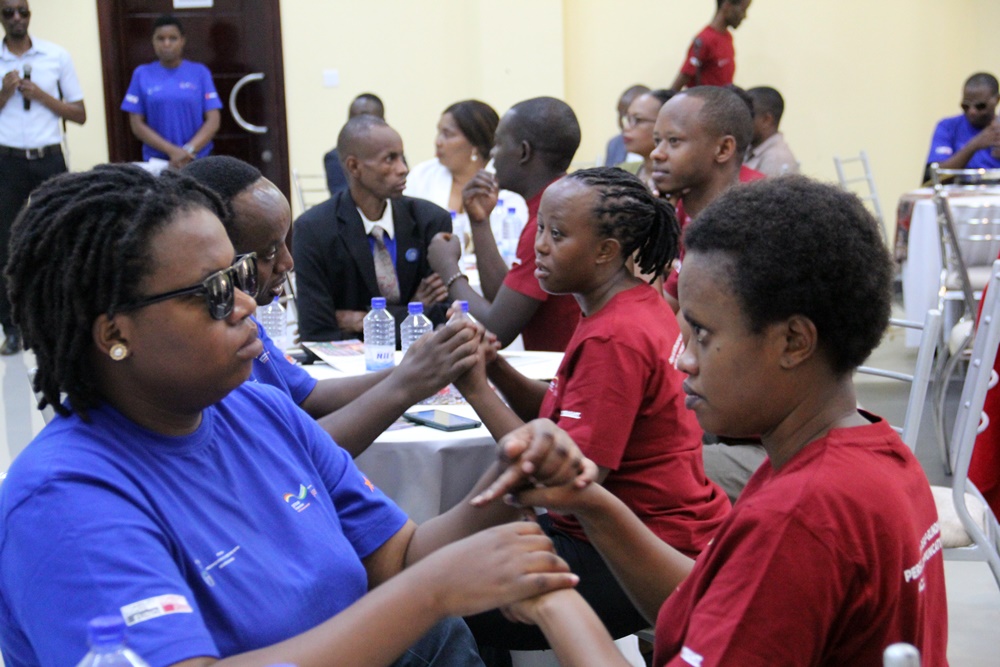
For individuals with deafblindness, this marginalization manifests as extreme communication barriers, chronic isolation, and systematically limited access to education, healthcare, and public services. The communication barriers inherent to deafblindness, like tactile sign language and intervenor services, create an almost impenetrable barrier between individuals and the healthcare system. A person who cannot hear independently decode their symptoms, understand a diagnosis, or provide informed consent. The COVID-19 pandemic brutally exposed these vulnerabilities, with research revealing profound gaps in emergency communication and healthcare access for deafblind individuals in Rwanda and neighboring countries. When health information is disseminated auditorily through radio or visually through posters, it bypasses this population entirely, turning a public health crisis into a life-threatening isolation.
Furthermore, the exclusion from education and social protection creates the social determinants of poor health. Lack of education limits health literacy and economic opportunity, perpetuating a cycle of poverty that is both a cause and consequence of ill health. This compounded marginalization, often intersecting with gender and rural location, leads to the disproportionately high rates of chronic poverty, social isolation, and mental health challenges observed globally among the deafblind community.
The argument that recognition is a form of epistemic justice is therefore not merely theoretical; it is a practical necessity for health. This recognition triggers the development of targeted interventions, from training healthcare workers in tactile communication to ensuring that public health campaigns are universally accessible. It operationalizes the commitments enshrined in the Convention on the Rights of Persons with Disabilities (CRPD), particularly Article 25, which guarantees the right to the highest attainable standard of health without discrimination. Currently, the "other" category allows structural systems to bypass this obligation, leaving the needs of persons with deafblindness unaddressed.
Rwanda's emerging advocacy provides a viable and replicable pathway for change. The eleven concrete resolutions from its 2025 International Deafblindness Awareness Day commemoration, ranging from a nationwide identification campaign to the formal amendment of the disability law, represent a multi-sectoral blueprint for inclusion. Crucially, this movement has been co-led by ROPDB, embodying the CRPD's core principle of "Nothing About Us Without Us."
For other African nations, the steps taken in Rwanda offer valuable lessons that are scalable. The strategy is not to build parallel, costly new systems, but to integrate deafblindness into existing governance, health, and data collection structures. National health policies and strategic plans must explicitly name and provide for persons with deafblindness. Training curricula for community health workers, nurses, and doctors must include modules on communicating with and providing care for individuals with dual sensory impairments. National census and health survey instruments must include deafblindness as a response option to break the cycle of statistical invisibility.
In conclusion, the journey toward universal health coverage and the achievement of the Sustainable Development Goals' pledge to leave no one behind will remain incomplete as long as entire populations are administratively erased. The formal recognition of deafblindness is the essential first step from the shadows of neglect toward a future of dignity and rights. It is a prerequisite for building health systems that are truly equitable, inclusive, and resilient. To see, to count, and to recognize is to affirm the personhood of every individual and to take the most critical step toward justice. The time for that step is now.
Contributors
Jean Claude Sabato–Conceptualization, Resources, Writing–Original Draft Preparation, Writing–Review & Editing; Joseph Musabyimana–Conceptualization, Resources, Writing–Original Draft Preparation; Oluwaseun Ayoola Ojomo–Supervision, Validation, Writing–Original Draft Preparation, Writing–Review & Editing; Tayechalem Moges–Supervision, Writing–Original Draft Preparation, Writing–Review & Editing.
Our Partners